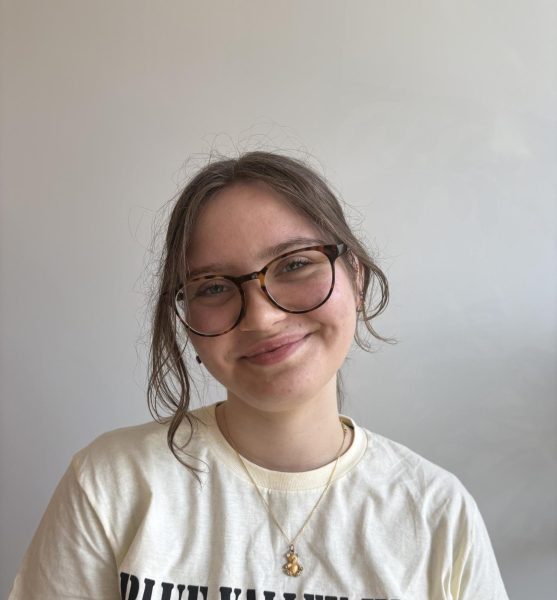



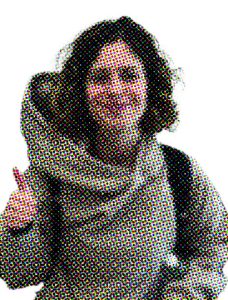
Mia Mondry, 12
Senior Mia Mondry, who started a new club titled Community Changes, aimed at spreading kindness throughout her school, describes the club’s informal structure, where members work collaboratively.
The club, which began mid-last year, has significantly grown in membership this year, indicating its popularity.
Mondry characterizes the club as giving, as its primary goal is to contribute positively to the community. She finds the club enjoyable and believes in its niche.

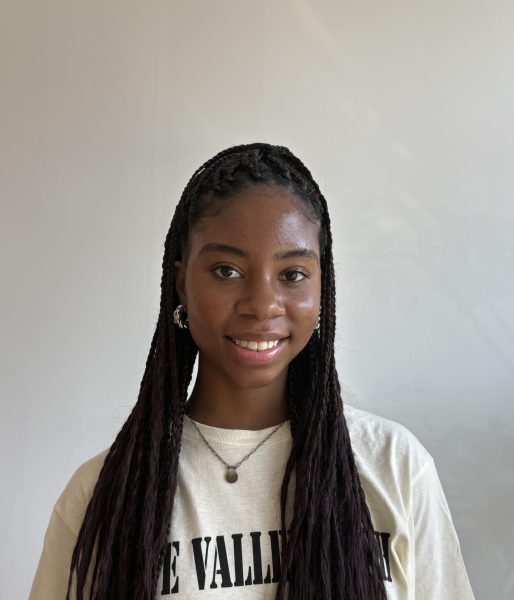
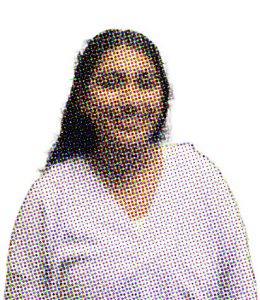
Noor Sarwar, 12
Science Outreach, led by president senior Noor Sarwar, is dedicated to sparking curiosity and passion for science among elementary school children through hands-on experiments.
As the only club in the district conducting on-site science-related field trips and demonstrations, they distinguish themselves by bringing engaging scientific opportunities directly to younger students.
Their unique approach involves performing experiments like making “bombs” and showcasing electrical phenomena, aimed at inspiring children’s interest in science exploration. Motivated by Sarwar’s personal childhood experiences of being captivated by science, the club seeks to make a lasting, significant impact by introducing students to the wonders of scientific discovery.
They encourage student participation through their field trip sign-up forms, with the ultimate goal of nurturing a love for science.
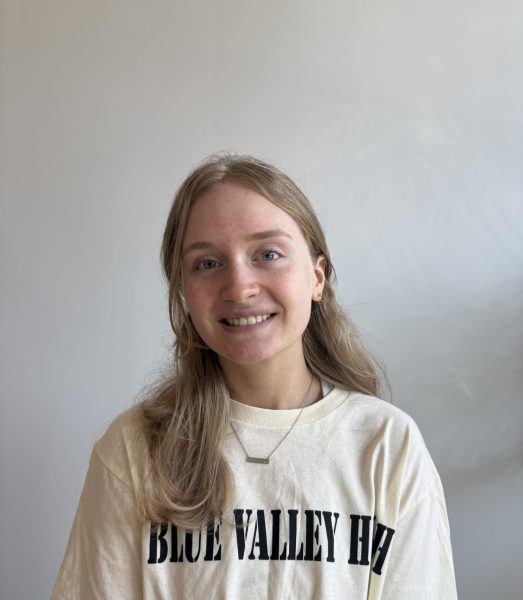
Simrun Kaberwal, 12
Senior Simrun Kaberwal, the Kay Club president, said the club’s focuses on volunteer service and community engagement.
Kay Club organizes events like creating dog toys for Wayside Waifs and volunteering at the Night at the Living Farm at Deanna Rose Farmstead.
The club aims to provide enjoyable volunteering opportunities without competition, fostering a sense of community and personal growth. Kaberwal highlights her three-year commitment to Kay Club and the club’s significant impact, including more than 100 members and numerous volunteering hours.
If students have any interest in joining the club, Kaberwal suggested to join the Band for further information about the November meetings.
WORDS BY JAIDYNE MEANS
In a fast-paced world filled with never-ending assignments and social responsibilities, finding moments of silence can only feel like a dream. But for freshman Muktha Busi, junior Will Cook and senior Elsie Lipari, their niche hobbies present themselves as a creative outlet from the noise.
“I’ve been [painting] since I was born,” Busi said. “My aunt, who lives in India, taught me.”
Busi, who works mostly with canvases and acrylic paints, loves to incorporate her finished pieces of artwork into her room decor.
“I really like decorating my room with all the paintings I’ve done [and] going shopping for the art supplies,” Busi said.
While she describes the decoration as a positive benefit she gains from painting, it isn’t the only benefit Busi gains from her hobby.
“Painting is like therapy,” she said. “It helps me get distracted from stress.”
Painting is more than just a creative outlet; it’s a way to practice patience and be still in your thoughts.
“I feel like it taught me a lot about patience and waiting for things to be done before just moving on,” she said.
Although Busi feels like the painting community is small, she does not mind the solidarity of the hobby itself.
“I feel like there aren’t that many people who work with [acrylic paint],” Busi said. “So it’s kind of something I do for myself.”
When asked what she would advise for someone thinking about starting to paint as a hobby, Busi’s advice is helpful.
“It helps you get rid of stress, and you don’t necessarily have to be good at it to start it,” she said.
While Busi uses painting as a calming tool, Cook approaches his specific outlet a bit differently.
“I really like birds and the way they sound,” Cook said. “I like to see all the diversity.”
This simple curiosity quickly turned into a passion for birdwatching.
“There’s a ditch behind my house, and there’s lots of birds back there,” Cook said. “When I’m really bored, I just kind of look back and wonder what kinds of birds they are.”
Cook describes how his hobby has shaped him in unexpected ways.
“It’s really grounded m,” he said. “It’s helped me connect with nature and find my sense of personal self.”
While Busi works with paintbrushes and canvases and Cook sits in serenity with his birds, Lipari works to construct entire ocean animals — but with a crafty twist.
“I make 3D sea creatures out of cardboard and newspaper,” Lipari said.
Lipari said she started this hobby on a whim.
“I randomly decided to make a turtle, and it was really fun,” Lipari said.
What started as an experimentation of creativity turned into a meaningful pastime.
“It’s really therapeutic — it gives me some time to reflect and have downtime,” she said. “I feel like it’s a way for me to stay off my phone.”
Despite this being a calming hobby, the artwork still comes with its difficulties.
“I get hand cramps when I cut the cardboard — [it] is very hard to cut,” Lipari said.
Despite challenges, Lipari continues to express herself through this intricate form of artwork.
“This hobby has made me appreciate the little things more, and my perspective has changed more to think, ‘Wow, that person has worked really hard on that.’” Lipari said.
WORDS BY EMME MCGUIRE
Many people look back on their middle school years with one of two reactions — a cringe or a shudder. While this might be dramatic, it is worth noting how recalling high school does not usually elicit the same response.
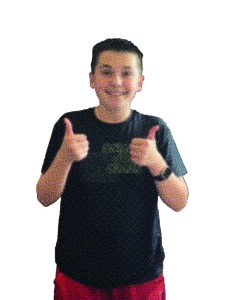
For freshmen Tori Conkin and Logan Anderson, high school has proven to be more enjoyable and allowed them to pursue their passions.
“I honestly expected it to be way more strict and not as fun as it is,” Conkin said. “Now that I’ve actually experienced a full quarter, it’s been really nice.”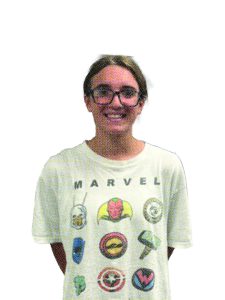
Acknowledging the burden of a more difficult course load, Anderson expressed similar sentiments.
“I was nervous because I knew classes would be getting a lot tougher,” Anderson said. “I was scared I wouldn’t be doing good, but now that I’m actually here, it gets easy, so I guess I had nothing to worry about.”
The transition to high school also means a new level of maturity among students, leading to stronger relationships between peers and teachers.
“[There is] definitely less bullying and more help,” Conkin said. “In middle school, the teachers weren’t as helpful, and there was more bullying. Now that we’re in high school, bullying isn’t cool.”
Along with additional responsibilities, high school also provides new freedoms.
“You get a little bit more free time,” Anderson said. “You can show up later on some days, and I love our options at lunch.”
Anderson believes upperclassmen, despite them seeming scary at first, can provide guidance to younger students and make them more comfortable in the school environment.
“Even though they’re a lot larger and older, they actually aren’t as frightening,” Anderson said. “Once you get to know more, they’re not as bad, especially if they’re your siblings. They’re good with helping you with work because they’ve already done that stuff.”
The transition to high school has helped Conkin feel more comfortable about being herself.
“I felt like I had to put on this mask of a completely different person [in middle school] so I wouldn’t seem weird, or I had to try and find ways to connect to o
thers more often,” Conkin said. “[In high school], there’s less judgment.”
While middle school provides surface-level knowledge, high school students have a wide range of choices when it comes to choosing classes. This lets them dive into subjects they enjoy.
“High schools are a lot bigger,” Anderson said. “They have a lot of different class options. They give you more variety, [and] they have a lot more club options.”
Conkin is taking advantage of the selections available in high school by being involved in FCA, Ambassadors for Christ and Cross Country.
“High school has way more opportunities for my future,” Conkin said. “It helps me that I can be more creative and find more clubs and activities.”
Anderson is currently involved in show choir and theater but is interested in possibly joining some of BV’s many clubs. He believes these clubs are key to students being able to express themselves.
“[In middle school], I couldn’t be as much ‘me’ — probably because there weren’t as many ways to show it,” Anderson said. “But, since there’s more ways in high school, that’s how people are able to show their true passions.”
WORDS BY PAIGE FAULKNER