

Admirable Academics
Teacher, students discuss class geared towards planning for the future
By Shea Splittorff
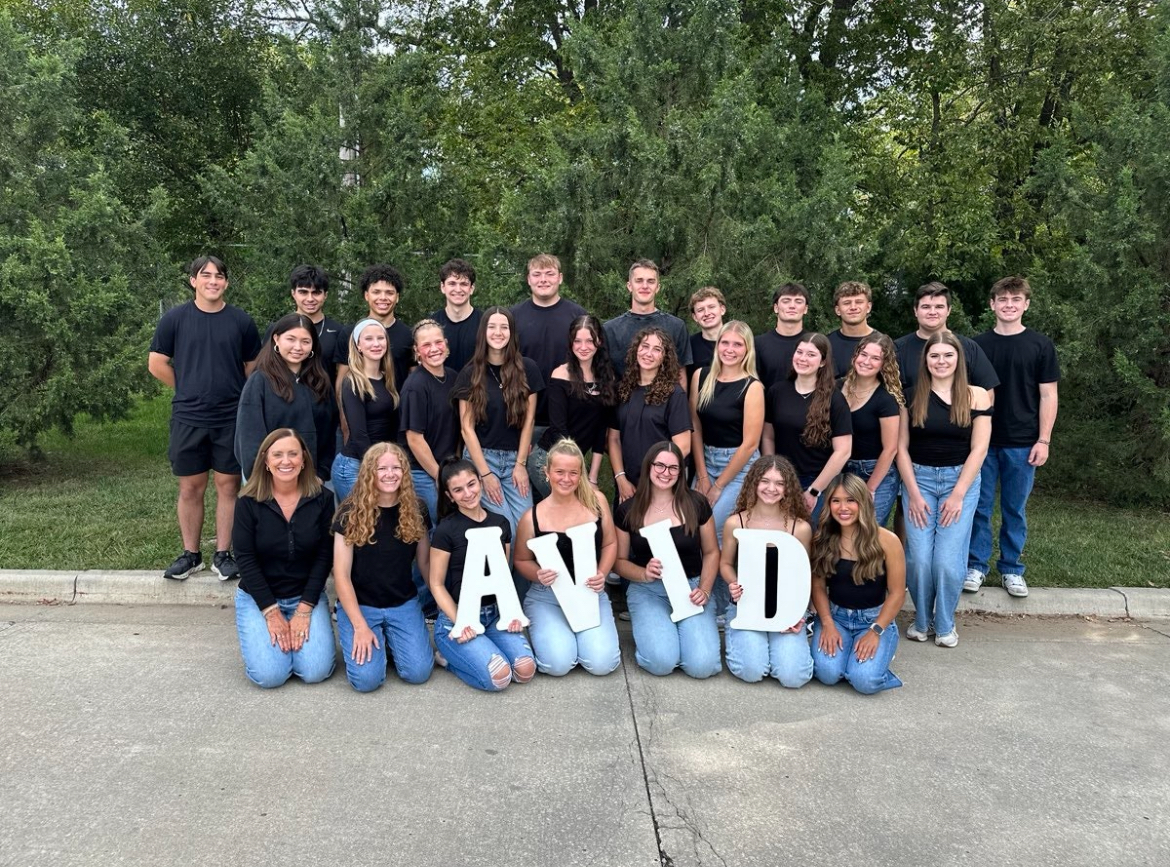
Founded in 1980, the Advancement Via Individual Determination class, or AVID, has been a pillar in student development across the United States. BV is one of the roughly 5,600 schools across the nation that has embraced the program, and in turn, witnessed the reward of changed student lives. Teacher Dianne O’Bryan, who has taught the course for 19 years, explains the commonly unknown class.
“AVID is a four year college readiness program where the kids stay together and follow a curriculum that’s focused on college prep activities, college research, [and] college visits,” she said. “Also improving skills like test taking, communication skills, [and] writing skills.”
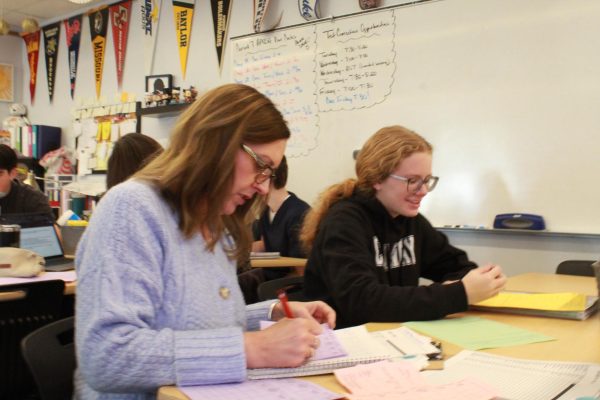
With an emphasis on building life skills, not just learning information, “everything we do is geared towards that [helping students prepare for the future],” O’Bryan said.
For example, every semester AVID students go up in front of the class and give a speech. This practice helps students establish confidence and composure through the growth of communication skills, so in the future they can excel when exposed to more high-stake environments.
“When our kids leave here and they go take speech class in college, or they go do a presentation in college, they just do it,” O’Bryan said. “It’s not this fear based experience that it is for a lot of other kids.”
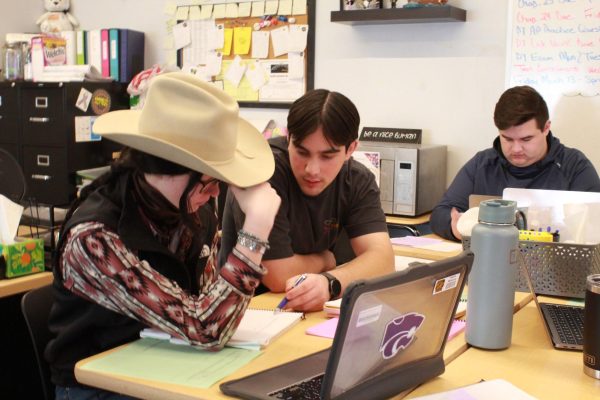 Beyond the vastly beneficial time spent on applicable skills for college and beyond, the connections made in AVID are just as valued.
“[AVID] definitely helped me a lot throughout high school, having [support] like that,” said senior AVID member Jackson Boegner. “It’s a class that’s consistent with the same people, but also something that can help me get through classes.”
Along with the academic benefits of AVID, Boegner learned a lot from the communicative aspect of the class as well.
“I feel like the most helpful [skill] is probably learning how to collaborate and work with people,” he said.
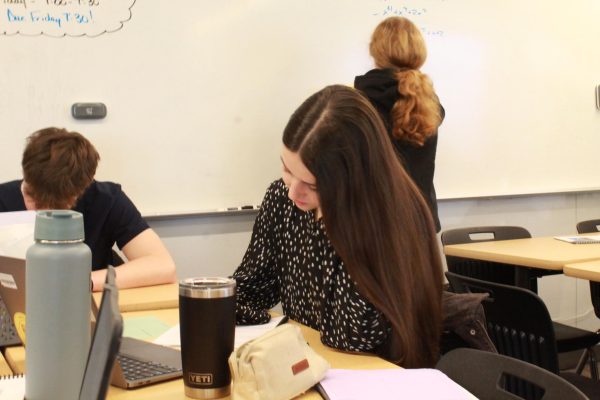 Caroline Gordon, another senior AVID student agreed saying that “[AVID] really helped me build up my confidence as a student.”
The unique balance within the AVID class of peers supporting each other while continually pushing each other benefits Gordon significantly.
“I probably wouldn’t [have] applied to the college I applied to if I hadn’t taken [AVID]” she said.
By creating such a positive environment, students are able to thrive while becoming closer and facing challenges together.
“My favorite part is definitely the people,” Gordon said. “I’ve met a lot of my best friends there.”
With the class all being so close, the motivation of a community all pushing to be better compounds and helps students feel empowered to challenge themselves in building life-long skills together. Gordon agreed that AVID emphasises “really useful skills that you don’t really learn otherwise.”
Through the exceptional balance of college planning, coupled with the practice of vital life skills, all enveloped in an incredibly supportive, high achieving environment, students are set up for success for the future
Set for Success
BV students share how they succeed with higher-level classes
By Abby Blasi
Center for Advanced Professional Studies (CAPS) Students
Grace Dubill, 11
 What CAPS classes are you taking?
“I took foundations of medicine last semester.”
What advice do you have for someone wanting to do CAPS?
“Explore all the different options they have; they have so many different paths, there’s an option for everyone. Everyone should at least try one thing at CAPS.”
How will CAPS help you in the future?
“I think connections-wise, some of the different connections that they have for me I can use in my future, going into healthcare, and it’ll help me later in the medical field.”
Do you feel like you’re missing out on the high school experience by being away from school?
“Definitely not. I honestly, really love the break in the day that I get to leave the building and get to drive my car. It feels like it breaks up the day better.”
What is your favorite part about CAPS?
“I love the people, I love all the different options that there are, and I love how the teachers are so passionate about what they’re teaching, because they have just been through the actual medical field.”
Hayden Leong, 12
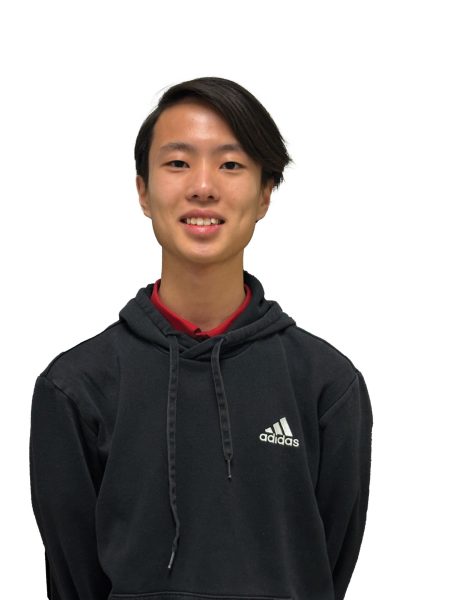 What CAPS classes are you taking?
“I’m taking the law program.”
What advice do you have for someone wanting to do CAPS?
“I would say spend your time well, you have a lot of free time, so utilize it.”
How will CAPS help you in the future?
“It really helps you find what you’re interested in.”
Do you feel like you’re missing out on the high school experience by being away from school?
“A little bit because I have afternoon CAPS, so I don’t get to see my friends as often after school.”
What is your favorite part about CAPS?
“For my classes, we go [on] a lot of field trips, which is cool.”
Johnson County Community College Dual Enrollment Students
Leen Mahfouz, 12
 What Classes have you taken at JCCC?
“At JCCC, I’ve taken college algebra and the CNA class.”
What advice do you have for someone wanting to do college classes at JCCC?
“I would say students need to know how to pace themselves, because you’re in a higher level [class], even though it’s easier because there are less students than if you would go to a regular university, it’s still a college where you have to work at an honors level.”
Do you feel like you’re missing out on your high school experience?
“Sometimes I feel like moving on to college makes you more isolated than you would normally be when you’re in high school.”
How will JCCC help you in the future?
I feel like JCCC is like a stepping stone for me to go to a four-year college, and it provides more scholarships and opportunities that a four-year college wouldn’t have for the first year. I’ve learned so much, and I was able to pass classes way easier than I would in a four-year college.”
What is your favorite part?
“The new people that I met. I feel the connections with the professors as well; it really made me understand how college life is.”
Mabel Craig, 12
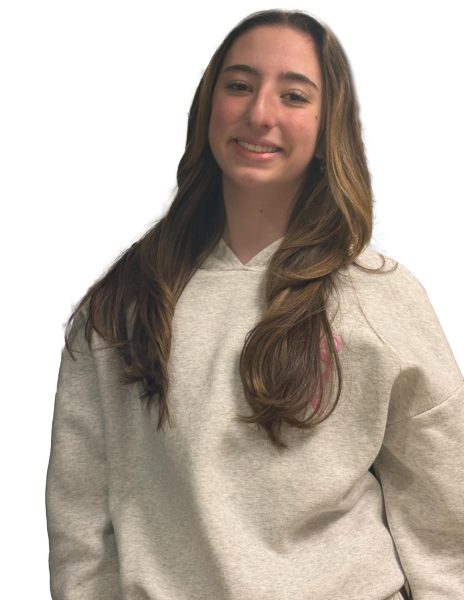 What Classes have you taken at JCCC?
“I took a dual credit math class through JCCC, I took a guitar class and I took a recording and production class.”
What advice do you have for someone wanting to do college classes at JCCC?
“Do it because it knocks out that credit, and you don’t have to take it in college. It’s a really good idea, because it costs a lot more when you try to take it in college.”
Do you feel like you’re missing out on your high school experience?
“No, I don’t think so. I think I’m getting the opportunities I need through JCCC, because it offers so many things that the school doesn’t.”
How will JCCC help you in the future?
“It’s already helping me with college applications, because having credit makes me not have to take a math class my freshman year of college, and the skills I learned through having to take college classes will help me prepare for real college classes in the future.”
What is your favorite part?
“My favorite part is that there are lots of different people who take classes there, not just people you’d find at school. Sometimes I’m in a class with adults, and it’s really interesting getting to know those kinds of people.”
AP student
Sejal Adhikari, 12
 What AP classes have you taken and what did you score on them?
“I’ve taken AP Physics, AP Pre-Calc, AP Psych, AP Chem, AP Lang, AP Lit, AP Bio, AP Calc Ab and AP Spanish. I’ve scored either 3, 4 or 5.”
What advice do you have for someone wanting to take AP classes?
“Definitely clear out your schedule for them because they are more time-consuming, but I’d recommend taking some to see how a college course is like.”
How will this help you in the future?
“It gives you more experience on what you’re going to see in college.”
What is your favorite part about AP?
“I think the people in the classes are a bit more mature than in regular classes.”

The Future?
How to overcome school stress and anxiety
By Elke Brock
School stress is something we have all experienced. From procrastinating homework and studying, to panicking for a test coming up, it can come in many forms: social scenes, extracurriculars, loneliness, and worry about what’s to come in the future.
If these developments continue after high school, it can, and does, cause students to dropout of college and live a harder lifestyle than before.
But if a student is able to figure out how to cope with all of these stress factors, then their life is able to break free of previous grievances. Academic pressure is when a student develops intense stress from demands to reach high grades. If a student doesn’t handle these situations and chooses to let the stress consume them, it can lead to fatigue, depression, irritability and a decline in academic ability.
However, this school stress can severely increase in college, and many are scared of what may happen in their future life.
Many will feel stressed living in this new college environment since it’s their first time living independently, which can be scary for some, along with navigating new relationships and feeling lonely.
There are many ways to manage this stress, but the most important is to balance your time. Take breaks when needed, establish a healthy schedule and set up a time to study.
Set up a healthy schedule to get proper sleep to stay energized during the day, but also have enough time to study. If it’s hard to know what to study and how to do it, ask your professor questions about the material or new ways to study that work for you.
Sometimes all this work can feel lonely or hard so staying in contact with parents and loved ones like old friends or siblings or relatives is still important in college, and will help shake the feeling of loneliness and self-doubt.
A huge worry shared by both parents and students is tuition, debt, loans and covering daily expenses. Overall, the US college debt is slowly rising, from $1.22 trillion in 2014 to over $1.7 trillion by 2021-2023, according to a research sheet by the Education Data Initiative. This can severely limit the possibilities that a student can have because they feel limited by their lack of funds.
To mitigate this, parents can set up a 529 savings account to lessen the debt for their child or a student can start saving up money with a job in high school. Money may always be a problem, but planning ahead can lessen the financial burden later on.
High schools and parents should also stop acting like college is the only thing a student must do to survive in the world. A student should be able to decide what they want to do after high school, either go to college or start a new path they want to build alone. The future may be stressful, but with the right coping strategies and support, the burden will become less and easier to manage for students.