


Creating Community
By Cady Reynolds
What is the line between individual student freedoms and staying connected as a school? Social studies teacher Brian Mowry feels community is one of the points of BV and public school in general.
“That’s one of the advantages that American schools have, is that we create small communities. That’s why we have so many activities. That’s why we have so many sports. That’s why we’re doing that,” Mowry said. “You don’t find that in other countries as much school is just something you go do and then you leave, whereas we try and build a legitimate school community.”
Mowry defines an aspect that’s important to the harmony of the community.
“The reason we do it is because we want [students] to have practice of what it means to be a part of a community. It’s a part of your civic formation, and that’s why we encourage you to get involved. That’s why we encourage you to go celebrate other people’s successes,” Mowry said. “We want you to be a part of a community and to see what that means. Being a part of a community is also being able to live with people who you disagree with.”
 Disagreement, especially in schools, is one of the more valuable parts of communities. Having people to challenge your ideas in a safe environment is vital to development.
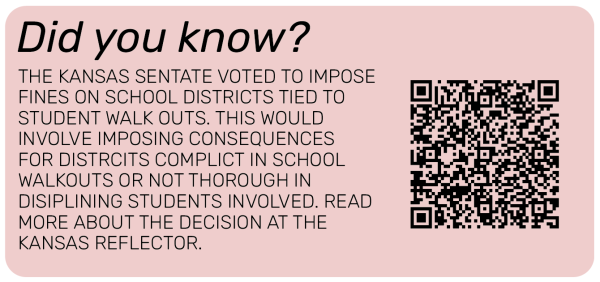
“The Supreme Court has also supported this idea that you don’t lose political speech when you enter into this building, so I see the administration’s job, and therefore the teacher’s job, is to create a safe community,” Mowry said. “A safe community is not necessarily a place where you are safe from being offended, or that you’re safe from not hearing things that you don’t like. A safe community is where you are not being harassed or any sort of physical abuse, that’s what I view as a safe community.”
Therefore, the school’s job in facilitating and maintaining this safe environment is to encourage political expression in a secure way.
“If we’re going to disagree, do walkouts or have debates in classrooms, I think those things are vital to your training as to how to be a part of the community. That if we are shutting that down and just trying to sanitize it. We are actually [slowing] your growth.”
Antifragility is a term coined by Nassim Nicholas Taleb, regarding systems that thrive and bloom because of adversity.
“Humans require stress and require pressure to be able to fully form the same way that a tree or a plant does. It needs the wind to then develop its rigidity,” Mowry said. “Part of our job at the public school is to send you off ready to participate as a citizen within your communities. You need to be able to do that in a place with guidance, and that guidance is a little bit social studies teachers, administrators and policy.”
The current political climate, being more divided than ever doesn’t help this case, but as Mowry puts it, the divisive nature of politics right now actually leads to a lack of authenticity.
“Young people see [how divided American politics are] and they decide the way to solve that problem is to not be authentic. I talked to so many kids that didn’t want to take a side, even though they have a side because the safe thing to do is to be politically or at least present as politically neutral,” Mowry said. “You see the craziness of what’s going on in the outer society, and your response, deservedly so, is ‘that’s scary. It’s dangerous. I don’t want to be a part of it.’ That does a disservice, because that’s making you fragile. I don’t think it’s actually dividing us more.”
Mowry tries to remedy this conformism through his classes and community.
“[In] my geography classes, I’m trying to make kids disagree to build a community to show that you can be part of a community where you disagree,” he said. “I feel like my job as social studies teacher is to preserve democracy, and that’s not the math teacher’s goal. That’s not the ELA teacher’s goal. That’s our goal. It’s not to teach you history — it’s to preserve democracy.”
Polarizing Politics
By Lucy James
Discussing different political thoughts and philosophies has always been the backbone of American democracy, but can or should those same discussions transfer to the classroom? Junior Miriam Mantara, organizer of the Feb. 17 protest against the U.S. Immigration and Customs Enforcement Agency (ICE), shared her opinions on political expression in school.

“Political discussion should be encouraged in classrooms, but it should be civil conversations, not pitting us against each other,” Mantara said.
There are some concerns about discussing and debating political topics in the classroom. Some are worried it may interfere with the school setting, or that topics such as race, diversity and political ideology may be discussed that aren’t a part of the school curriculum. However, some like Mantara believe that controversial conversations should be encouraged in the classroom as it can inform students on different viewpoints.
“A lot of people just go off what their parents say, and sometimes those opinions aren’t exactly the most logical,” she said. “I’m not saying [others’] beliefs are wrong. I think they should educate themselves on the other side as well.”
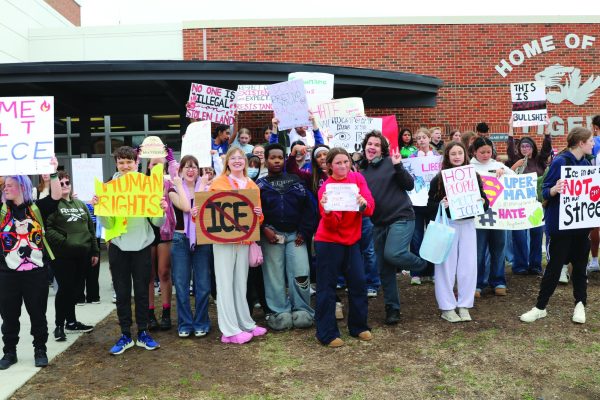
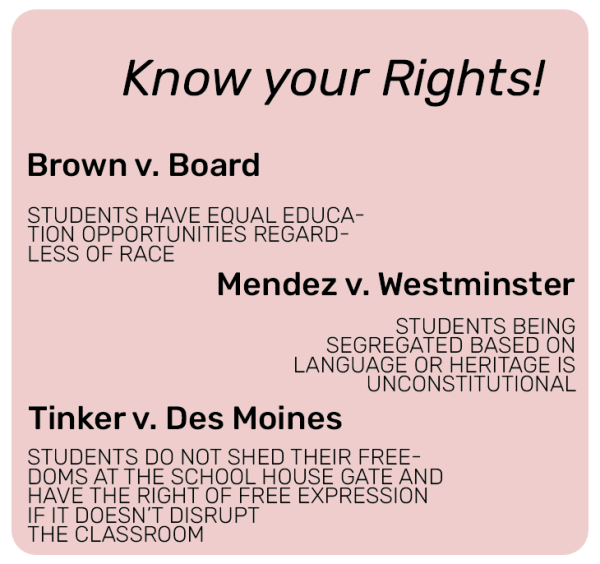
BV’s ICE protest was more unique than other schools, as there was a counter protest in support of ICE. Reactions to this have varied, and brings up the very important question of political expression, particularly when the student body is split. According to the 1969 court case Tinker v. Des Moines, students do not “shed their constitutional rights to freedom of speech or expression at the schoolhouse gate,” meaning that students do have a right to express their political beliefs in school. However, this is not a blanket protection, and the administration does have a say in the amount of expression in schools.
Mantara also believes it’s important to have discussions with opposing viewpoints, as long as it remains well-mannered.
“We can have civil conversations about politics in school and not just go off of what our parents believe,” she said. “I think a lot of us would get along better that way.”