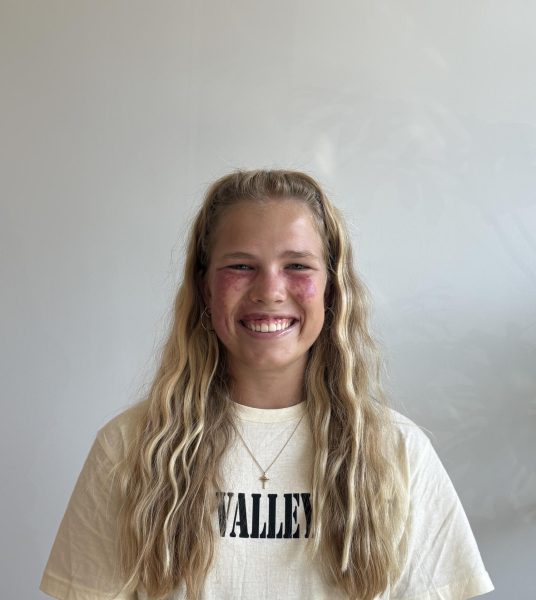


Sami Sandler
Deep-Rooted Gardens
With great familial bonds, comes great homegrown horticulture
Benjamin Werner
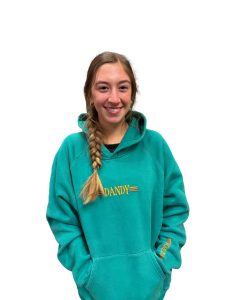
Kamryn Fisher, 11
Do you do a lot of planting?
“Mainly in the summer, I plant tomatoes. It’s like my favorite thing ever. My uncle used to have this whole tomato garden as a kid, and when I would go to Illinois, he had them, and I just loved it. So now it’s my thing.”
Do you have a garden outside?
“It’s a raised bed because my dogs will eat them otherwise. Last year, one of my dogs was just eating my oregano. I’m like, bro, out of all things, why the oregano?”
Do you use what you grow for meals?
“For all the herbs, I typically use it for lasagna. It’s really good. My mom makes it — props to her. And then the tomatoes—either we roast them with chicken or I’m too impatient [and] just eat them right off the vine because they’re so much better than store-bought ones.”
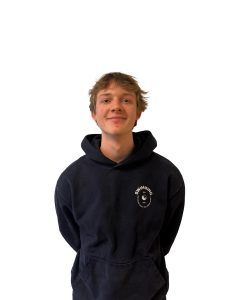 Jonas Tills, 12
What makes you a green thumb?
“Ever since I was little, I just loved to garden. It’s one of my favorite things,” Tills said. “It’s a bonding activity between me and my mom. It holds a special place in my heart.”
Did your mom get you into gardening?
“Definitely. We used to live in Wisconsin, and we had a really big backyard, so a lot of it was a garden. We have made our own vegetables, and we put them in our food. It was really cool.”
Any specific vegetables?
“I was like five at this time, so it’s a little bit hazy, but I remember peas and cucumbers, rhubarb and strawberries as well.”
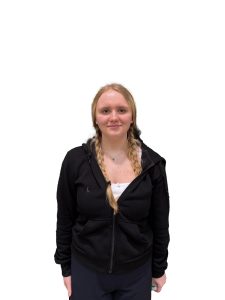 Aleks Moret, 10
Why do you consider yourself a green thumb?
“I grew up living back and forth between my parents and my grandmothers. My grandmother is probably where I would say I get my green thumb from. She has been gardening for about as long as I can remember,” Moret said. “Sustenance farming is easier for her than going out into town, considering she’s a little further out, so it’s easier to garden and grow crops.”
What is your farm like, and what do you plant?
“I would say it’s pretty small,” Moret said. “It’s just a few crops, so there’d be tomatoes, corn, [and] peppers. She also really liked gardening flowers, so when I was a kid, I would always grow zinnias around her yard. That was my favorite thing to do.”
Do you do most of the planting?
“No, unless if it was with the zinnias then I would be digging and putting the seeds in. It’s simple enough. But my grandma is the one. She typically waters a few times a week in the spring or summer. When it’s getting colder, she’ll go out and buy more groceries.”
Go Touch Grass
How being outdoors can help boost your mood
Shea Splittorff
We’ve all heard the phrase “touch grass,” which is most of the time used as an ironic insult to pick on iPad kids. But let’s all take a step back for just a moment and think: when was the last time I touched grass?
Maybe it wasn’t that long ago. Maybe on a walk over the weekend, you reached down to grab a pretty flower alongside the path, or maybe you rolled down a hill recently. My guess would be, it has actually been a minute since a strand of grass was between your fingertips.
It’s not just about grass though. Being outdoors as a whole is incredibly overlooked nowadays in this highly isolated, sped-up, technological world.
As a society, the simple beauty of the sun shining against our skin, a wispy cloud painted across the sky or the comforting softness of grass beneath our feet, is not just overlooked but completely ignored.
The world has done nothing but grow faster and faster and FASTER throughout the years, and nature has simply been left behind, not advancing quick enough to fit into the productive structure our lives are forced to fulfill. Funny how depression, anxiety, ADHD, and Vitamin D deficiencies are at an all time high, while the “average time outdoors has fallen 14% (35 minutes) between the 1970s and 2010s.”
Beyond just mental stability, “the latest drop in the percentage of time outdoors coincides with a 490% increase in Vitamin D deficiency diagnoses,” reflecting the reality that nature not only heals us mentally, but is necessary for our bodies to function.
UCLA Health continues by stating that spending time outside “boosts the immune system, enhances cognitive function, improves heart health, promotes better sleep, reduces stress, stimulates physical activity, and supports mental health.” Who wouldn’t want all those benefits?
Now I’m not here to say the direct causation of mental illness and health deficiencies is from decreased time spent outside, but there’s definitely a correlation to be made.
“For example, K.M. Beyer and others found that individuals who spent 5–6 or 6–8 hours outdoors during weekends had lower odds of being at least mildly depressed, compared with individuals who spent less than 30 minutes outdoors on weekends.”
This information has since been put into action and implemented at times for mental illness treatment, such as a study in the UK at a NBI (nature-based-infrastructure), which “facilitate[d] engagement with nature as a treatment for individuals diagnosed with anxiety and/or depression” — finding that “the wetland site provided a sense of escape from participants’ everyday environments, facilitating relaxation and reductions in stress.”
Even more astonishingly, we don’t need a fancy facility to experience such reliefs through nature, because nature is all around!
The excuses “I don’t have time,” “it’s too cold,” “there’s nothing to do,” should no longer trump your mental wellbeing and health. A simple stroll around the neighborhood, sledding after a fresh snow, a few throws of a ball to your dog, a bike ride to your friends house, laying out by the pool or even sitting on the patio with family and friends are all ways to get outside. Use every excuse to get some fresh air, and you will start feeling the difference. Humans were never meant to be stuck inside, surrounded by white drywall and plastic chairs, so of course we aren’t feeling our best. We’re meant to be free, reminded of how small we are in this beautifully vast world. Let nature reveal that to you by starting small and touching grass.
Think Outside [the Box]
Jaidyne Means